History and Culture
Spetses appears on maps as "Pityoussa" since the Mycenaean era, and from the 13th century received the name "Isola di Spezie" under Venetian rule. In modern Greece, Spetses holds a prominent place thanks to its heroic role in the 1821 War of Independence.
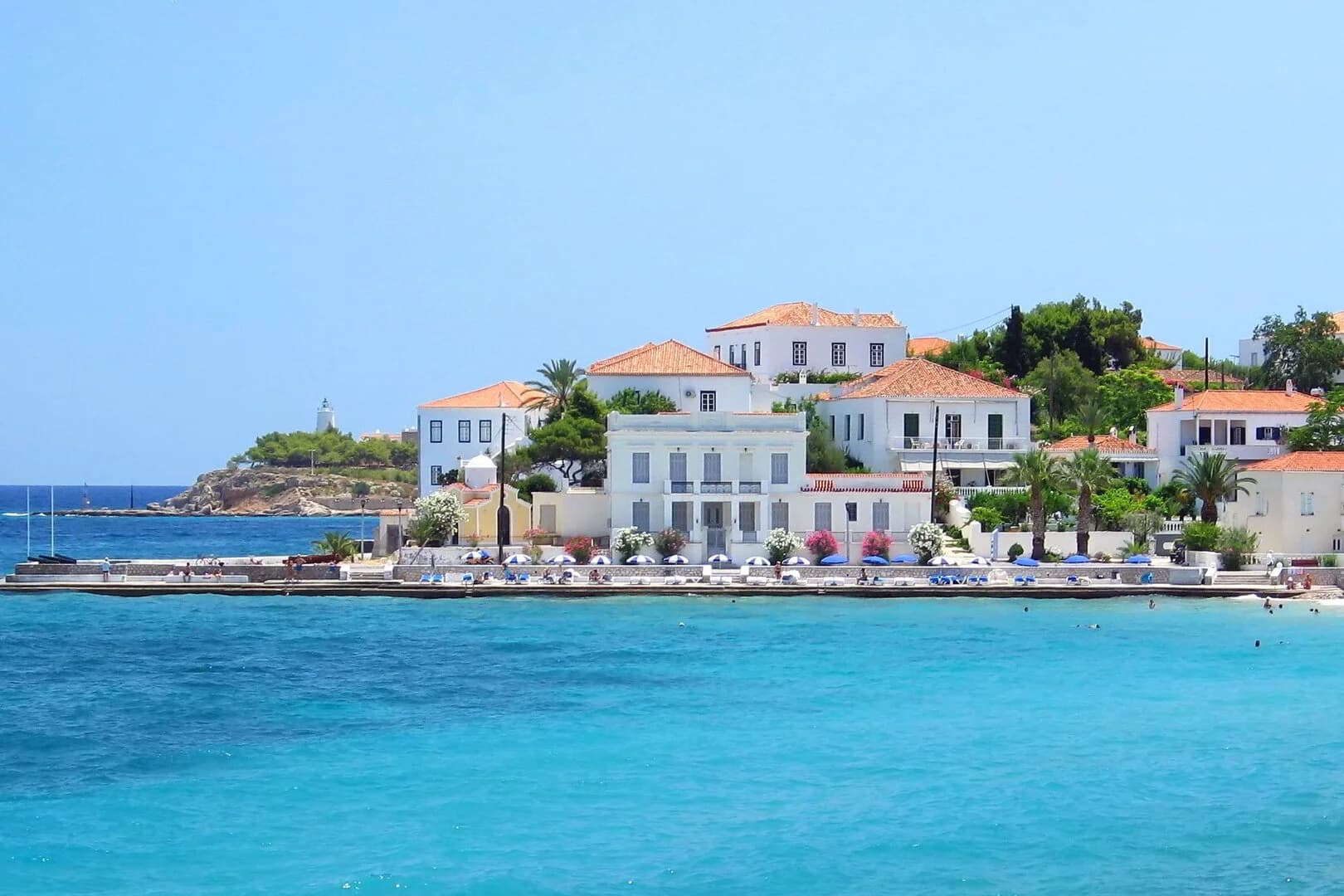
Aspects of the island's history
The role in the 1821 War of Independence
Spetses was the first island to raise the flag of the revolution against the Ottomans, on 3 April 1821. Hydra and Psara followed immediately. The Spetsiote sailors distinguished themselves through their courage and the speed of their response, contributing crews and ships at every critical point of the struggle. The naval activity of the southern Argo-Saronic Gulf was based out of Spetses.
Maritime tradition
From the 18th century, the Spetsiotes built a powerful commercial fleet in the Mediterranean. The fortunes of the shipowners of the Golden Age (1770-1821) are reflected in the manor captain's houses of the island, many of which survive today. The island remains synonymous with traditional wooden shipbuilding, with active shipyards at the Old Harbour.
Laskarina Bouboulina
Laskarina Bouboulina (1771-1825) was the first and only woman admiral in world naval history up to her time. She funded the revolution from her personal fortune and commanded a fleet in naval battles. The Bouboulina House Museum in Spetses, run by her descendants, is one of the island's most significant historic landmarks.
Armata — The annual commemoration
On 8 September 1822, the Spetses fleet, reinforced by Hydriotes and Psarians, repelled the Ottoman attempt to retake Nafplion. The victorious Naval Battle of Spetses is commemorated every September with the Armata, the island's foremost festival — a week-long programme of cultural events culminating in a re-enactment of the naval battle.
Local architecture
The traditional settlement of Spetses is preserved intact. The stone manor houses of the shipowners, smaller residences, and monuments of religious architecture (such as Agios Nikolaos and Panagia of Armata) compose the island's character. The pebble-stone alleys are a traditional local technique.